What is the first decision when buying in Pump Hill?
Which Pump Hill property form, ownership structure and completion stage fit the intended use and budget?
Coordinate the search, financing and property review before the right opportunity creates time pressure.

Concise, extractable answers first; evidence, definitions and property-level limitations follow below.
Which Pump Hill property form, ownership structure and completion stage fit the intended use and budget?
Identify address-specific water, drainage, slope, noise, traffic, construction, fire, environmental or insurance questions relevant to the Pump Hill property; do not generalize an exposure to every home.
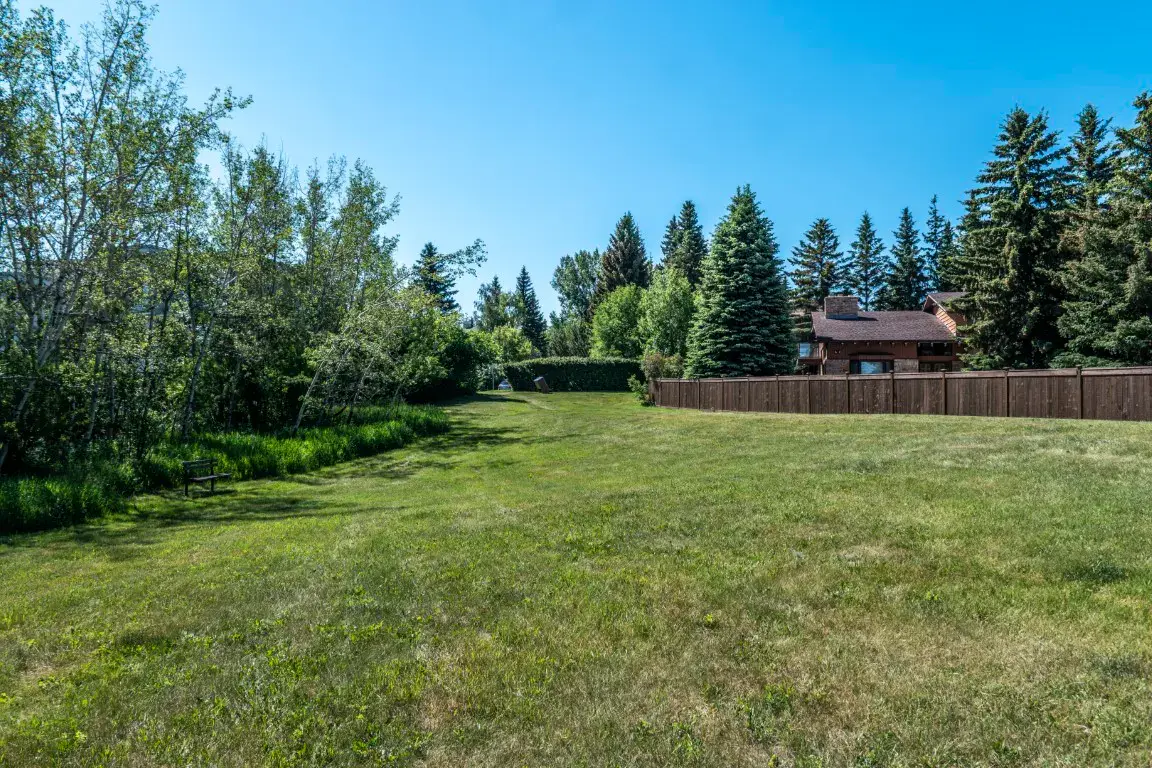
Verify current Pump Hill parks, pathways, recreation facilities and any access or membership rules with the operator or municipality. Verify the route, operating status, access and seasonal relevance from the exact address.
Dusko Sremac is the primary agent for this site, working with featured REALTOR® Jonathan Ashkin and the wider Real Estate Partners by Real Broker team. No unsupported top-agent or community-sales ranking is claimed.
Address-level permits, land use and planning records
Open official source ↗02Find land titles, documents or plansGovernment of Alberta · accessed 2026-08-26Title, registered-interest and plan due diligence
Open official source ↗Official records provide dated community context. Current listing status and conclusions about one property still require the applicable live record and property documents.
355 occupied private dwellings were reported as single-detached houses in the 2021 Census profile (59%); 75 apartments in buildings with more than five storeys represented another 13%.
Pump Hill’s largest reported construction cohort was 1961 to 1980 with 285 occupied private dwellings (48%), followed by 1981 to 1990 with 185 (31%).
450 private households were reported as owner households (75%) and 150 as renter households (25%) in 2021.
Source: The City of Calgary, 2021 Census Community Profile: Pump Hill. Values are Census observations and may not total exactly because of rounding or source disclosure controls.
Clarify the home, site, timing and total investment that fit the move.
Organize financing, deposit logistics and specialist availability.
Use the dedicated community search and team network.
Review title, permits, condition, documents and property-specific risk.
Structure price, terms, dates and conditions around the evidence.
Identify address-specific water, drainage, slope, noise, traffic, construction, fire, environmental or insurance questions relevant to the Pump Hill property; do not generalize an exposure to every home.
Confirm the current municipal land-use designation, permit history, approved plans and any nearby application for the exact Pump Hill address.
Review the current title and applicable registered instruments, easements, caveats, liens, encumbrances and plans with qualified legal advice.
Set inspection scope from the property's actual age, construction type, systems, renovations, site and known disclosures; a community profile is not a property inspection.
Luxury value is rarely explained by square footage alone. Documentation, design, privacy, outlook, replacement cost and the competing buyer set all belong in the comparison.
Financing, deposit access, document review and specialist availability should be organized before urgency compresses the decision. Conditions are then chosen for the property and the evidence—not copied from a generic offer template.
Browse the dedicated HomesForSaleNearMe community search, then bring a specific address back to Dusko and the team for status confirmation and a property-level review.
Pump Hill deserves a property-level approach that separates architecture, site, effective age and finish from a broad neighbourhood average. This record turns the community file into route-specific work while keeping the subject property and current professional advice separate.
Which Pump Hill property form, ownership structure and completion stage fit the intended use and budget? For this buyer decision file, use that evidence to state the buyer's real trade-off before broadening or narrowing the search. Read it beside: Distinguish a feature inside the mapped community from one that is nearby, planned or accessible only from particular streets or phases. Comparison checkpoint: Haysboro. Compare a nearby established community with a wider range of price points, redevelopment and renovation paths and transit access. Current listing status still belongs to the approved live record.
Identify address-specific water, drainage, slope, noise, traffic, construction, fire, environmental or insurance questions relevant to the Pump Hill property; do not generalize an exposure to every home. Applied to the buyer decision file, the evidence helps assign the unresolved issue to the right document, inspection or professional review. Read it beside: Describe nearby services as nearby rather than inside the community unless the mapped boundary and current source support that wording. Comparison checkpoint: Palliser. Compare the neighbouring established southwest community, separating exact lot, renovation level, housing form, condominium obligations and street context. Condition and legality still require the documents and review appropriate to the property.
355 occupied private dwellings were reported as single-detached houses in the 2021 Census profile (59%); 75 apartments in buildings with more than five storeys represented another 13%. Within the buyer decision file, its job is to classify the housing form and effective age before selecting comparable properties. Read it beside: Compare a nearby luxury detached-home and estate market where waterfront or lake-edge position, lot, architecture and renovation scope require separate analysis. Comparison checkpoint: Bayview. Compare a nearby luxury detached-home and estate market where waterfront or lake-edge position, lot, architecture and renovation scope require separate analysis. A lender or mortgage professional must decide how the actual property affects financing acceptance.
475 residents aged five and older had moved within the prior five years (34%); that is household-mobility context rather than a proxy for real estate turnover. The buyer decision file should use this record to test the route, access or amenity relationship from the exact address. Read it beside: Census population, household, tenure, dwelling-form and construction-period context. Publisher record: The City of Calgary. Comparison checkpoint: Oakridge. Compare an established southwest alternative with detached, attached and condominium choices near the reservoir and park system. Community context cannot establish value for the subject home.
The profile counted 1,455 people in private households across 600 households, with an average household size of 2.4 people. Here, the practical use is to keep the dated community baseline separate from assumptions about the household or home. Read it beside: Price against the alternatives the same buyer can purchase now, including relevant adjacent communities and property forms. Comparison checkpoint: Haysboro. Compare a nearby established community with a wider range of price points, redevelopment and renovation paths and transit access. A named source supports only the claim and geography recorded for it.
Compare the neighbouring established southwest community, separating exact lot, renovation level, housing form, condominium obligations and street context. Carry this into the buyer decision file to explain why the comparison area belongs in the active alternative set. Read it beside: Bayview — Compare a nearby luxury detached-home and estate market where waterfront or lake-edge position, lot, architecture and renovation scope require separate analysis. Comparison checkpoint: Palliser. Compare the neighbouring established southwest community, separating exact lot, renovation level, housing form, condominium obligations and street context. A comparison relationship does not make two properties or communities equivalent.
Census population, household, tenure, dwelling-form and construction-period context. Publisher record: The City of Calgary. For the buyer decision file workflow, use it to attach a named source and support boundary to the factual claim. Read it beside: Confirm the survey or real property report, encroachments, compliance questions, access and utility rights for the subject parcel. Comparison checkpoint: Bayview. Compare a nearby luxury detached-home and estate market where waterfront or lake-edge position, lot, architecture and renovation scope require separate analysis. Historical evidence must not be presented as current inventory or operating status.
Lead with the real differentiators of the Pump Hill property: site, effective age, documented improvements, layout, ownership structure and immediate setting. The next step in the buyer decision file is to anticipate the evidence a future resale or negotiation may need. Read it beside: Match the inspection and document plan to the subject property's actual construction, additions and effective age rather than the community's largest Census-era cohort. Comparison checkpoint: Oakridge. Compare an established southwest alternative with detached, attached and condominium choices near the reservoir and park system. The paired records define the next question; they do not settle the property conclusion.
Each route has a separate job. Follow the evidence from community context to the specific property instead of repeating the same article under another keyword.
Coordinate the working range, deposit and property limitations without treating an online estimate as approval.
Continue →02Luxury is treated as a property conclusion—not a neighbourhood-wide adjective.
Continue →03Ask Dusko and the team to connect the community evidence to the title, documents, condition and live alternatives.
Continue →Call Dusko and Real Estate Partners for a private buyer, seller or property-specific conversation.